Shop
Popular Products
-
-
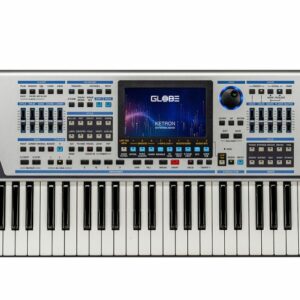
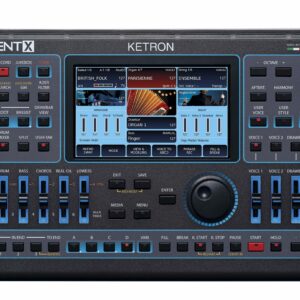
KETRON EVENTX SOUND MODULE
EVENT-X is designed to provide easy access to the most sophisticated style architecture ever developed on an arranger module.
It comes with over 500 Styles, divided into Real Styles, Live Styles or MIDI Styles.
The Real Styles, with their impressive authenticity, stand out thanks to the backing tracks in full audio format.
EVENT-X features a rich manual Lower section, with three independent parts and Mono / Poly modes.
You can use the new advanced Style Edit to program your new styles and save any customized configuration in the User memory.
€3.899,00KETRON EVENTX SOUND MODULE
€3.899,00Available in 7-15 days
-
CASIO GP-310BKC7 HYBRID ΠΙΑΝΟ ΗΛΕΚΤΡΙΚΟ
Το υψηλής ποιότητας υβριδικό πιάνο, CELVIANO Grand Hybrid GP-310 – κατασκευασμένο σε συνεργασία με την C. Bechstein – αναπαράγει ακόμα και τις πιο λεπτές εκφάνσεις που χαρακτηρίζουν τον ήχο παγκοσμίως διάσημων grand pianos.
€3.200,00€3.500,00CASIO GP-310BKC7 HYBRID ΠΙΑΝΟ ΗΛΕΚΤΡΙΚΟ
€3.200,00€3.500,00In stock
-
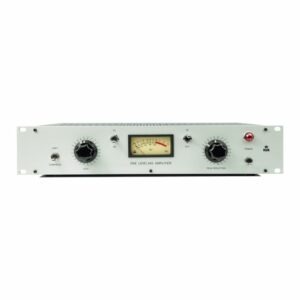
IGS AUDIO ONE LEVELING AMPLIFIER OPTICAL COMPRESSOR
One Leveling Amplifier
€1.700,00€1.900,00IGS AUDIO ONE LEVELING AMPLIFIER OPTICAL COMPRESSOR
€1.700,00€1.900,00Available in 7-15 days
-
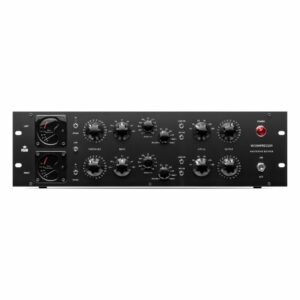
IGS AUDIO V8 COMPRESSOR
Smooth and gentle compression
€2.900,00€3.100,00IGS AUDIO V8 COMPRESSOR
€2.900,00€3.100,00Available in 7-15 days
-
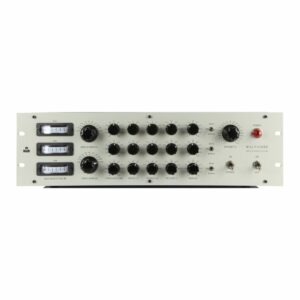
IGS AUDIO MULTICORE MULTIBAND COMPRESSOR
Three bands of classic analog VCA compression provide an infinite field of possibilities to shape the sound.
€3.550,00€3.700,00IGS AUDIO MULTICORE MULTIBAND COMPRESSOR
€3.550,00€3.700,00Available in 7-15 days

-

Rossini – The Barber of Siviglia
With the arrangements for the woodwind quintet begins a series of arrangements for instrumentation which, due to the variety of sounds and possible variations of its five different instruments, seems predestined to make works of this type accessible to chamber music as well.This series follows in the tradition of countless contemporary arrangements, such as the Harmoniemusic, created in part by the composers themselves, only now for a scoring brought to life by Czech-born French composer Anton Reicha in the early 19th century and only achieved its current level of virtuosity with the invention of the valve horn.€18,00Available in 1-3 days
-
Nelson – More Tunes for My String Orchestra
A Sad Song
Don Quixote Rides Again
Mr. Carey’s Romance
Roundabouts
The Golden Bow
The King And The Miller€45,00Available in 1-3 days
-
Mozart – String Quintets Vol. 3
With the publication of the masterpieces K. 593 and 614, all of Mozart’s string quintets are now available in Henle Urtext. Our edition corrects several widespread misreadings of the musical text and also draws on the first printings as important sources. The first printing of the Finale from the Quintet in D major K. 593 diverges greatly from the autograph. The editors consider it probable that the print version was authorized, which is the reason why we have published both versions of the movement (to enable a better comparison it is given as an ossia version above the musical text). In the Preface and Comments, the editors shed light on the source situation of these two immortal works written in the last two years of Mozart’s life.€37,00Available in 1-3 days
-
Mozart – String Quintets Vol. 2
In the Mozart Year 2006, Henle will begin publication of all of Mozart’s string quintets in a three-volume Urtext edition (parts and study scores). Volume II, comprising the best-known and most often played quintets in C major (K. 515), g minor (K. 516) and c minor (K. 406/516b) from 1787 is the first to appear.
This Urtext edition contains an exciting finding: it draws upon a hitherto unknown source. Recently Ernst Herttrich, one of the two editors, found handwritten parts for these works, containing additions in Mozart’s hand – predominantly concerning dynamics and articulation. The music world is sure to eagerly await volumes I and III which are to be published in the course of the next two years.
String Quintet C major KV 515
String Quintet g minor KV 516
String Quintet c minor KV 406 (516b)€40,00Available in 1-3 days
-
Barenreiter Mozart – Symphony for woodwind quintet in G minor, K. 550
The arrangement of Mozart’s Symphony in G K. 550 includes all four movements and is ideally suited to the five instruments – flute, oboe, clarinet, horn and bassoon – of the classical wind quintet. The edition includes a reference score and parts.€35,70€39,70Available in 1-3 days
-
€38,50
Available in 1-3 days
-
Mozart – Sinfonia concertante in E flat major KV Anh. I/9 (297b)
We know from letters to his father that during his stay in Paris in 1778 Mozart wrote a Sinfonia concertante for flute, oboe, horn, bassoon and orchestra for a quartet of wind soloists who were also there – Mozart’s autograph was lost, the work is missing.In the 19th century, a copy of a Sinfonia concertante in E-flat for oboe, clarinet, horn, bassoon and orchestra appeared, for which Mozart’s authorship was claimed and which – despite the different instrumentation of the wind quartet – was linked to the Sinfonia concertante, which was believed to be lost has been brought. For a long time, the work was considered genuine, but vehement doubts have been raised about its authenticity for around 25 years, which relate not only to the scoring of the soloist quartet but also to the orchestral parts.Robert Levin’s reconstruction is based on the assumption that the setting of the solo parts is genuine in its germ and has been re-instrumented by a foreign arranger (flute to oboe, oboe to clarinet). Levin considers the orchestral parts to be fake. In his reconstruction, Levin restored the instrumentation of the soloist quartet with flute, oboe, horn and bassoon mentioned in Mozart’s letters and rewrote the orchestral parts. Thorough analysis of Mozart’s style and an intimate knowledge of Mozart’s writing enabled Levin to take the risk of this reconstruction. It is available as rental material (BA 7137) and is part of the popular repertoire of solo wind instruments.€25,00€25,60Available in 1-3 days
-
-
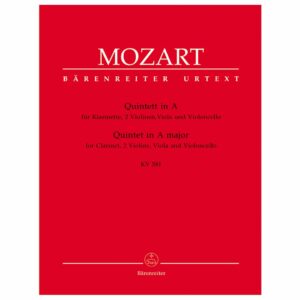
Mozart – Quintet in A major KV 581 “Stadler Quintet”
Pages; 8/8/8/8/7€17,80€19,80Mozart – Quintet in A major KV 581 “Stadler Quintet”
€17,80€19,80Available in 1-3 days
-
-
Mozart – Concerto No. 11 in F major K. 413
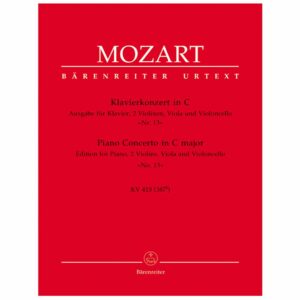
“Mr Kapellmeister Mozart hereby announces to the distinguished audience the publication of three new piano concertos. These 3 concerts, which can be performed with a large orchestra with wind instruments or only a Quattro, namely with 2 violins, 1 viola, and a violoncello, will not be performed until the beginning of April this year. J. (1783) come to light …” This advertisement shows that Mozart wanted to keep the accompaniment apparatus flexible in the piano concertos KV 413-415 (and KV 449, as we know from a letter from Mozart to his father). In addition to the large orchestral scoring, a piece of pure chamber music scoring with simply scored strings is also possible.The edition takes this into account: on the one hand, it enables the performance of the works in the large orchestral sound form, but on the other hand, enriches the attractive group of works of chamber music with piano.€31,50Available in 1-3 days
-
Mozart – Concerto No. 14 in E flat major KV 449
“Mr Kapellmeister Mozart hereby announces to the distinguished audience the publication of three new piano concertos. These 3 concerts, which can be performed with a large orchestra with wind instruments or only a Quattro, namely with 2 violins, 1 viola, and a violoncello, will not be performed until the beginning of April this year. J. (1783) come to light …” This advertisement shows that Mozart wanted to keep the accompaniment apparatus flexible in the piano concertos KV 413-415 (and KV 449, as we know from a letter from Mozart to his father). In addition to the large orchestral scoring, a piece of pure chamber music scoring with simply scored strings is also possible.The edition takes this into account: on the one hand, it enables the performance of the works in the large orchestral sound form, but on the other hand, enriches the attractive group of works of chamber music with piano.€31,50Available in 1-3 days
-
Mozart – Piano Concert In C Maj Kv 415
“Mr Kapellmeister Mozart hereby announces to the distinguished audience the publication of three new piano concertos. These 3 concerts, which can be performed with a large orchestra with wind instruments or only a Quattro, namely with 2 violins, 1 viola, and a violoncello, will not be performed until the beginning of April this year. J. (1783) come to light …” This advertisement shows that Mozart wanted to keep the accompaniment apparatus flexible in the piano concertos KV 413-415 (and KV 449, as we know from a letter from Mozart to his father). In addition to the large orchestral scoring, a piece of pure chamber music scoring with simply scored strings is also possible.The edition takes this into account: on the one hand, it enables the performance of the works in the large orchestral sound form, but on the other hand, enriches the attractive group of works of chamber music with piano.€29,50Available in 1-3 days
-
Mozart – Piano Concert In A Maj Kv 414
“Mr Kapellmeister Mozart hereby announces to the distinguished audience the publication of three new piano concertos. These 3 concerts, which can be performed with a large orchestra with wind instruments or only a Quattro, namely with 2 violins, 1 viola, and a violoncello, will not be performed until the beginning of April this year. J. (1783) come to light …” This advertisement shows that Mozart wanted to keep the accompaniment apparatus flexible in the piano concertos KV 413-415 (and KV 449, as we know from a letter from Mozart to his father). In addition to the large orchestral scoring, a piece of pure chamber music scoring with simply scored strings is also possible.The edition takes this into account: on the one hand, it enables the performance of the works in the large orchestral sound form, but on the other hand, enriches the attractive group of works of chamber music with piano.€29,50Available in 1-3 days
-
Mozart – Adagio & Rondo KV617
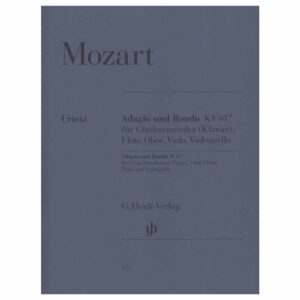
A genuine discovery! Written at the same time as the Magic Flute, this is Mozart’s final piece of chamber music. Anyone lacking a glass harmonica should try it with a piano or a harp (it has even been heard with a marimba!). It’s worth the effort, and Henle’s scholarly-critical urtext material offers a 100% reliable musical text.€29,50Available in 1-3 days
-
Meyerbeer – Quintet in E flat major
The source-critical edition is the first edition of the clarinet quintet, which was lost after the Second World War; it was only recently found in the estate of the clarinettist Carl Bärmann. Meyerbeer wrote this quintet in Vienna in 1813 for his friend, the celebrated clarinettist Heinrich Bärmann, to whom CM von Weber also dedicated a number of compositions. The virtuosic treatment of the clarinet is new and unusual for the time. Meyerbeer allows them to emerge clearly from the strings, almost reaching the limits of their technical possibilities. Meyerbeer’s clarinet quintet enriches the already sparse literature for clarinet in the field of chamber music in the 19th century. The scientifically critical edition makes this masterpiece accessible for practice for the first time. In addition to the pure musical text, it offers a detailed foreword that introduces the history of the work, as well as a critical report. Dieter Klöcker set up the voices for practical use.€28,50Available in 1-3 days